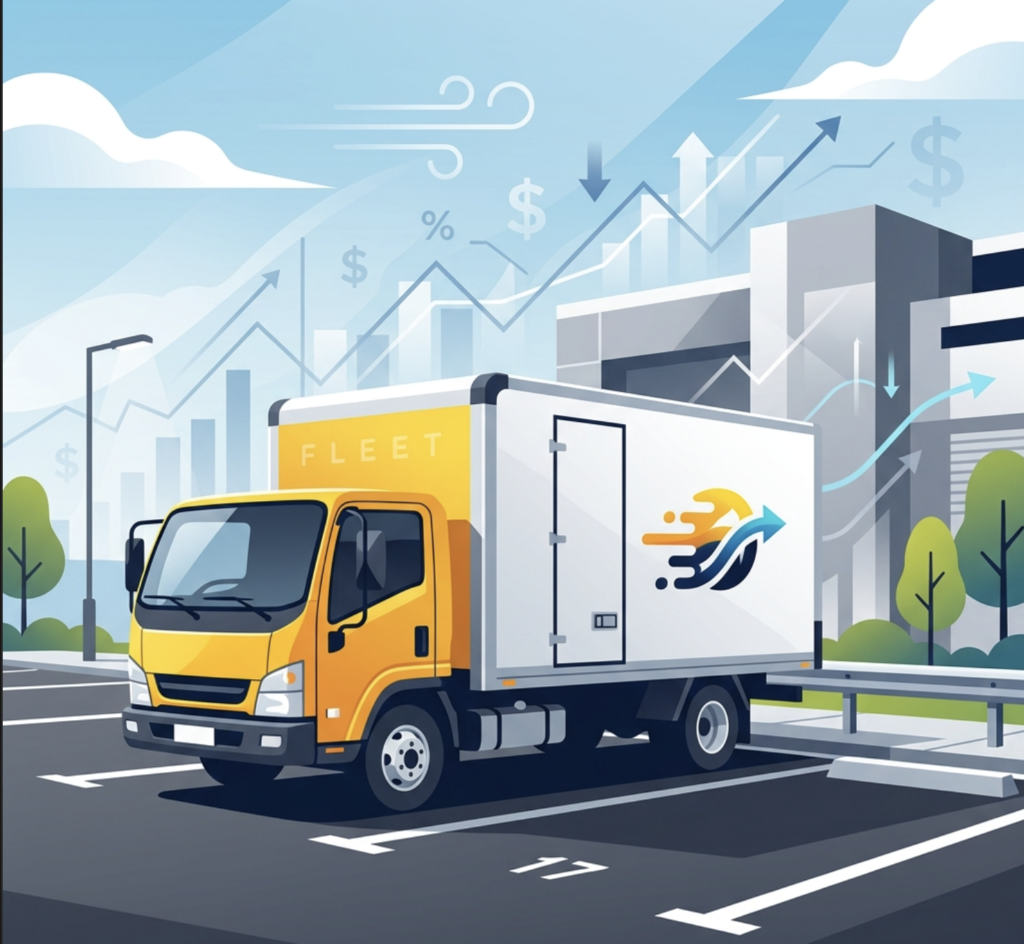
Walk through the dispatch yard of any mid-sized HVAC, plumbing, or landscaping company on a Tuesday afternoon, and you’ll likely see something that makes operations managers wince: parked trucks.
To the untrained eye, a parked 5-ton box truck or transit van is just steel resting between jobs. But to a business owner, a parked commercial vehicle is a financial black hole.
For decades, fleet managers have accepted this downtime as the “cost of doing business.” They purchase or lease enough vehicles to handle their absolute maximum capacity during the busy season, fully accepting that those same vehicles will sit idle during slow weeks.
In the logistics industry, this is known as “eating the idle cost.” And in today’s economy, it’s a luxury that most local businesses can no longer afford.
The Real Math Behind a Parked Truck
When a commercial vehicle isn’t moving, it isn’t just failing to generate revenue—it is actively bleeding cash from your bottom line. Let’s break down the true expenses of a parked asset:
1. Commercial Fleet Insurance Commercial auto insurance doesn’t care if your truck is driving 500 kilometers a day or sitting in a gravel lot for a week. You are paying premium, commercial-grade insurance rates 365 days a year. When a truck sits idle, that daily insurance cost is pure loss.
2. Aggressive Asset Depreciation Commercial vehicles depreciate rapidly. A $120,000 box truck is losing a fraction of its value every single day. If that vehicle is only utilized 60% of the time throughout the year, you are taking a 100% depreciation hit for 60% of the value generation.
3. Parking and Storage Overhead Real estate isn’t cheap. Securing, paving, and monitoring a commercial lot large enough to store idle 5-ton and 26-foot box trucks is a massive monthly overhead. You are effectively paying premium rent to store non-performing assets.
4. Capital Opportunity Cost Every dollar tied up in a parked truck is a dollar that cannot be spent on marketing, hiring, or upgrading equipment. It is trapped capital.
Why “Eating the Cost” is No Longer Necessary
Historically, fleet owners had no choice. You couldn’t rent your commercial truck out to a random consumer due to massive liability risks, insurance voids, and the threat of severe vehicle damage. The only option was to leave the keys on the desk and eat the cost.
But the B2B landscape is changing.
While your fleet might be experiencing a slow week, another business just down the road is experiencing a massive delivery spike. A wholesale distributor might be desperately searching for a 20-foot box truck to handle holiday overflow. An event production company might need a 5-ton truck just for the weekend.
Monetizing the Downtime with B2B Capacity Sharing
This is where the concept of B2B Capacity Sharing completely changes the financial equation for fleet owners.
Through secure platforms like SpotFleet, businesses can safely rent out their idle commercial hardware to vetted, local B2B partners.
- No Consumer Liability: You aren’t renting to the general public. You are subcontracting your hardware to registered, verified corporate entities.
- Protected Insurance: Ironclad B2B agreements ensure that your commercial insurance and NSC ratings are strictly protected while the asset is leased out.
- Pure Profit: Because the fixed costs (insurance, lease payments) are already sunk, the hourly or daily rate generated from renting out the idle truck goes almost entirely to your bottom line.
Stop Parking Your Profits
The most successful commercial fleets of the future will be measured by their utilization rate, not just their total vehicle count.
Every day a truck sits in your yard, you are writing off expenses. By tapping into a secure B2B capacity network, you can flip the script—turning your biggest operational liability into a reliable, high-margin revenue stream.
It’s time to stop eating the cost of idle time. Put your parked assets back to work.
Leave a Reply